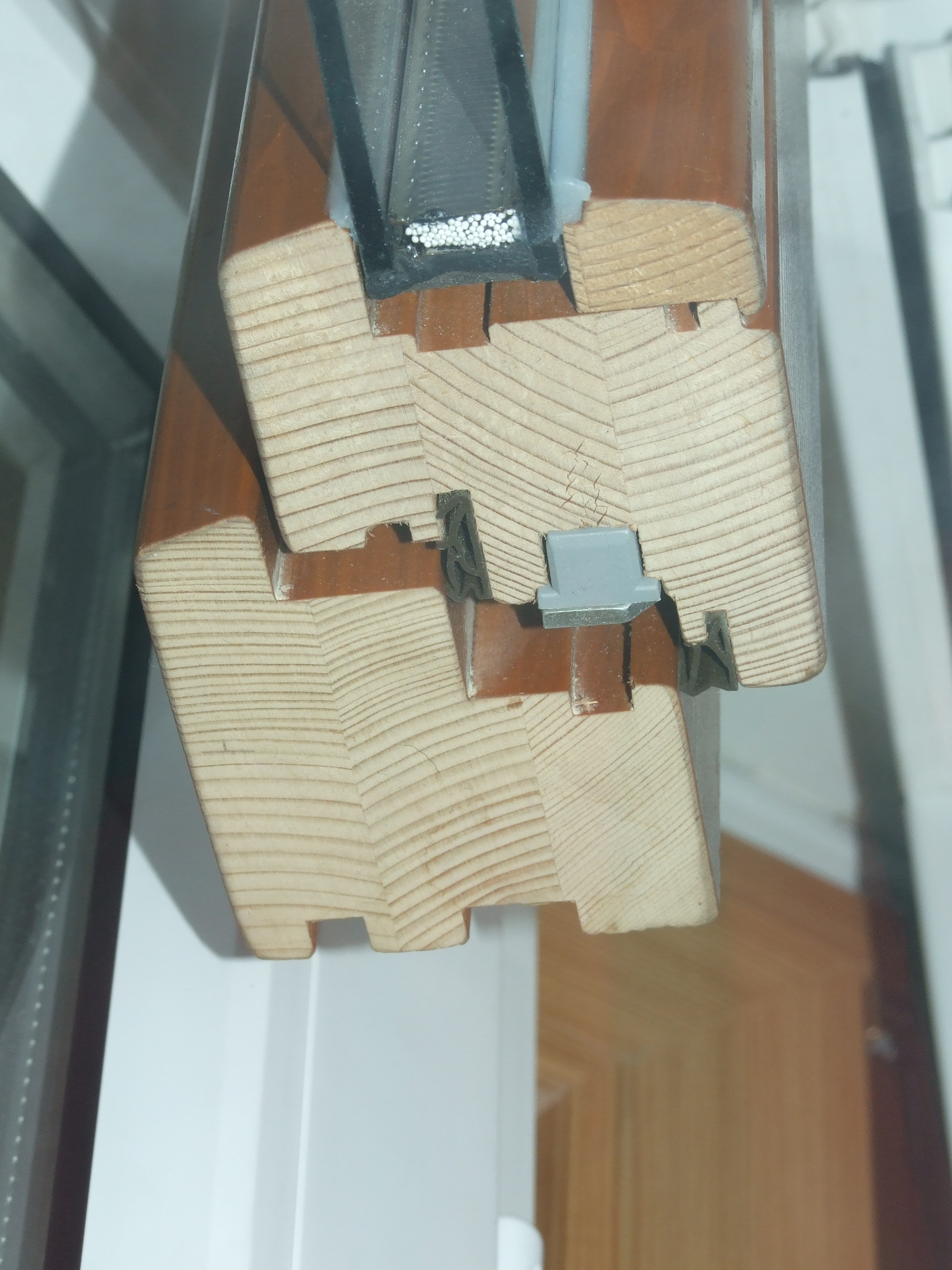
Much of the attention on windows goes to the glass, yet the frame sets the boundary of the assembly and is frequently where comfort problems begin. In a cold climate the frame edge is the part most likely to feel cold to the touch and to collect condensation.
Why the frame edge matters
The centre of a multi-pane unit is usually its best-insulating point. Performance falls off toward the edges and through the frame, where materials conduct heat differently. A frame that conducts readily creates a cold interior surface, and when warm indoor air meets that surface, moisture can condense.
How the common materials behave
Vinyl (PVC)
Hollow vinyl frames insulate reasonably well and resist moisture. Multi-chamber profiles improve thermal behaviour. Vinyl is widely used in Canadian residential replacement work.
Fibreglass
Fibreglass frames are dimensionally stable across large temperature swings and insulate well, which suits regions with sharp seasonal extremes.
Wood
Wood insulates well by nature and is often clad on the exterior to limit maintenance. It remains a traditional choice where appearance matters.
Aluminium
Bare aluminium conducts heat strongly and is poorly suited to cold climates unless it includes a thermal break that interrupts the metal path.
Condensation is a signal, not just a nuisance
Condensation on the inside of a frame in winter usually points to a cold interior surface meeting humid indoor air. Improving frame insulation, managing indoor humidity, and ensuring good air sealing all reduce it. Persistent condensation is worth addressing because trapped moisture can affect surrounding finishes over time.
Matching frame to glazing
A high-performance triple-glazed unit set in a poorly insulating frame gives up part of its advantage at the edges. For balanced results, the frame choice should keep pace with the glazing choice discussed in the glazing layers article, and both feed into the whole-unit U-factor rating.
Practical takeaways
- Judge a frame on insulation and stability in cold, not only on appearance.
- Avoid non-thermally-broken aluminium in heated, cold-winter homes.
- Read interior condensation as feedback about the frame and indoor humidity.
References for further reading: Natural Resources Canada, the National Research Council of Canada, and ENERGY STAR Canada.