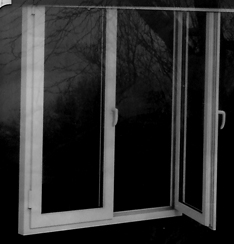
When a window is marketed as "energy efficient," the single number that backs the claim is usually its U-factor. It describes how readily heat passes through the whole window assembly — glass, spacer, and frame together — and it is the figure that matters most during a long, cold heating season.
What the U-factor measures
U-factor is a measure of heat transfer per unit area for a given temperature difference. A lower U-factor means the assembly loses heat more slowly. Unlike a rating that describes only the glass, the rated U-factor for a window covers the complete unit, which is why two products with the same glass can rate differently once their frames differ.
U-factor versus R-value
Walls and insulation are usually described by R-value, which measures resistance to heat flow. Windows are conventionally described by U-factor, which measures the rate of heat flow. They are related but not interchangeable. Because they are near-inverses, comparing a wall's R-value directly to a window's U-factor without converting can be misleading.
How to read the label
In Canada, residential windows are commonly tested under the rating system administered by the National Fenestration Rating Council and referenced by ENERGY STAR Canada. A certified label typically lists several values:
- U-factor — rate of heat loss for the whole unit; lower is better in winter.
- Solar Heat Gain Coefficient (SHGC) — how much solar heat the window admits.
- Visible Transmittance (VT) — how much daylight passes through.
- Air Leakage — how much air passes through the assembly.
Reading order that helps in cold climates
- Check the U-factor first for heat retention.
- Check air leakage, since drafts undermine an otherwise good unit.
- Consider SHGC against the orientation of the window.
Why orientation changes the answer
In a heating-dominated climate, a south-facing window can benefit from a moderate SHGC because admitted winter sun offsets some heat loss. North-facing windows see little useful solar gain, so a low U-factor carries more weight there. This is why a single "best window" rarely exists for an entire house.
Practical takeaways
- Compare products on the rated label, not the brochure description.
- Treat the U-factor as a whole-window number, frame included.
- Pair the U-factor reading with air-leakage and SHGC rather than judging it alone.
For more detail on the components behind these numbers, see the companion articles on frame materials and glazing layers.
References for further reading: ENERGY STAR Canada (energy efficiency program), Natural Resources Canada, and the National Research Council of Canada.